[su_button url="http://www.kashikiri-onsen.com/kyusyu/kagoshima/myouken/gajoen.html" target="blank" style="3d" background="#66BCD5" size="6" wide="yes" center="yes" radius="round" icon="icon: arrow-circle-right"]日本語サイト[/su_button][su_button url="http://www.gajoen.jp/en/" target="blank" style="3d" background="#66BCD5" size="6" wide="yes" center="yes" radius="round" icon="icon: arrow-circle-right"]OFFICIAL WEB[/su_button]
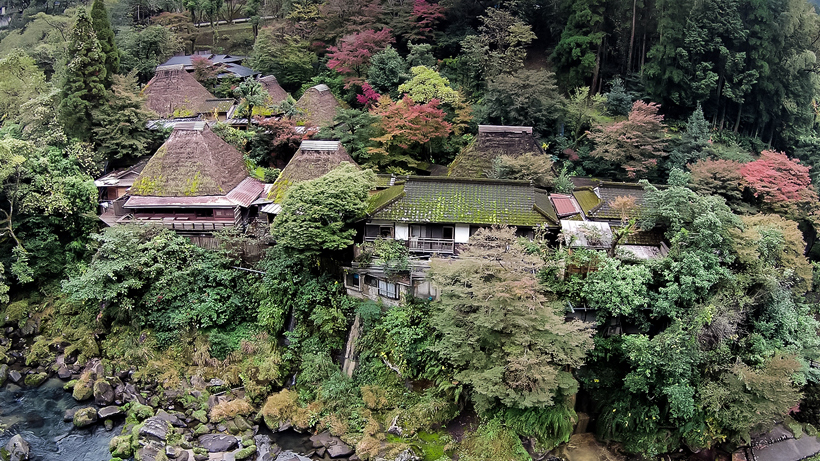
古き良き時代の日本の田舎の原風景
今や、日本の温泉旅館は、貸切風呂の進化版として、露天風呂付き客室が、ブームを越えて、定番化している。
特に最近の高級旅館は、必須のアイテムとなっている感がある。
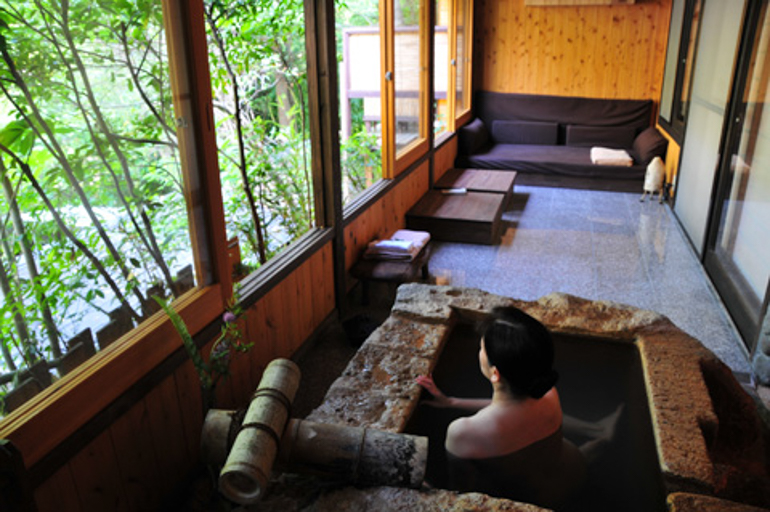
その客室露天風呂を、最初に”発明”したのが、実はこの宿なのだ。
それだけではない。
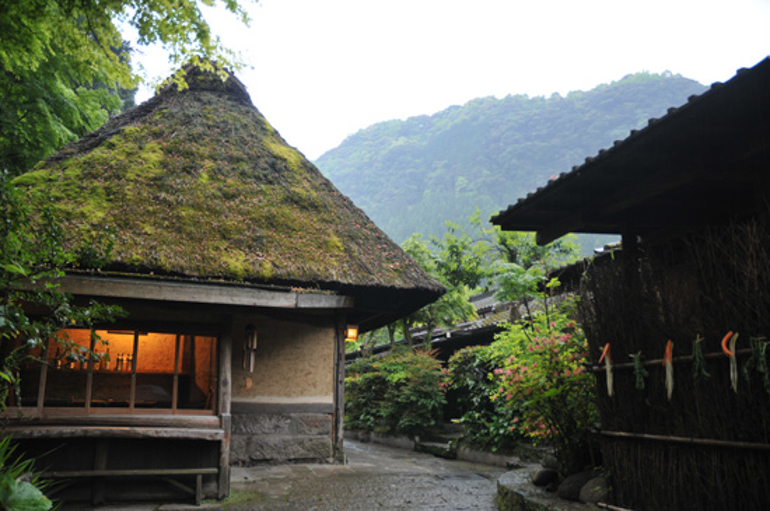
茅葺き屋根の古民家を移築しての客室。
大きな岩をくり貫いた湯舟。
敷地をねり歩く、放し飼いのニワトリ。
現代の旅館業界、日本の温泉地に、多大な影響を与えた宿のひとつと言っていいだろう。
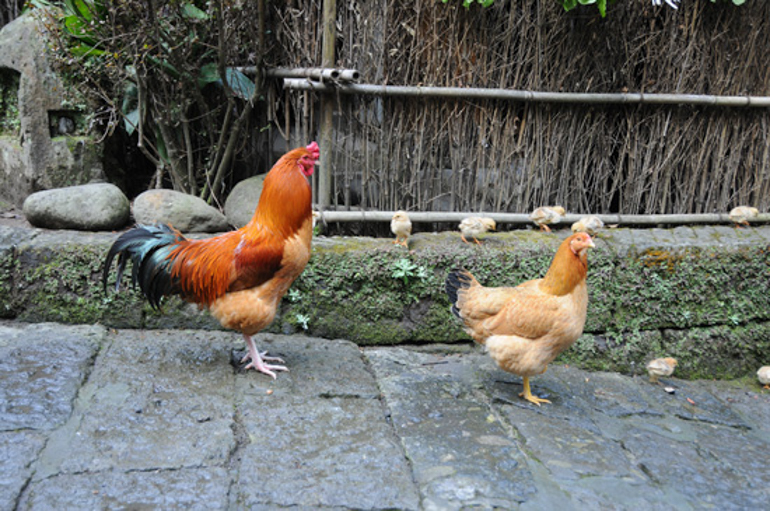
さらに、自ら運営する菜園や養鶏場により、食材を調達し、しかも無農薬農法など、昔ながらの”日本の田舎の味”を追求する。
つまり、地方(鹿児島=薩摩)の文化、風習を、旅館というステージで、現代人に伝えていくといったアプローチを試みているのだ。
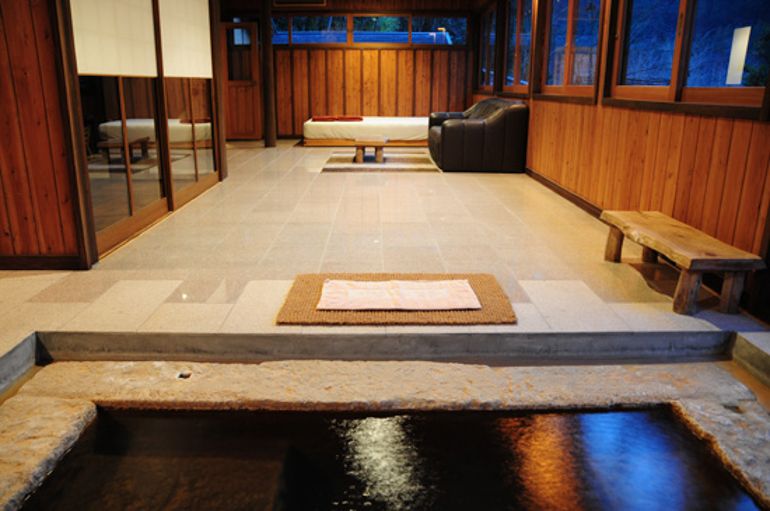
最近では、リビングルームの中に温泉風呂を備えた「お風呂リビング」なる、ユニークで、他に類を見ないスタイルの客室タイプも誕生させた。
オーナーの田島健夫氏は、旅館業界の常識にとらわれず、常にオリジナリティを求め続けており、「忘れの里 雅叙苑」は、多くの同業者が連日のように視察に訪れるほどだ。
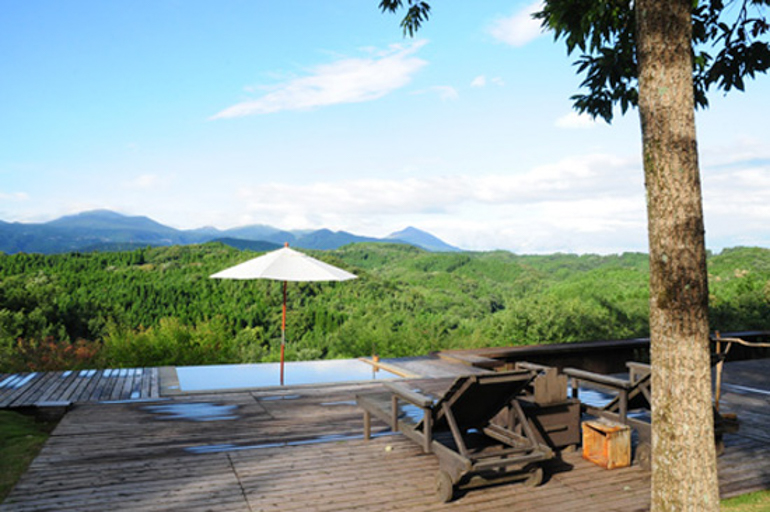
さらに最近では、60ha敷地(東京ドーム13個分)に2つの宿泊施設と3つの日帰り施設しかない贅沢なレイアウトの究極の温泉リゾート「天空の森」も話題を呼んでいる。
時を忘れ、日常から離れ、温泉に身を委ね、薩摩料理に舌鼓。
「忘れの里 雅叙苑」は、「日本人の心のふるさと」そのものなのかもしれない。
「風」の客室露天風呂
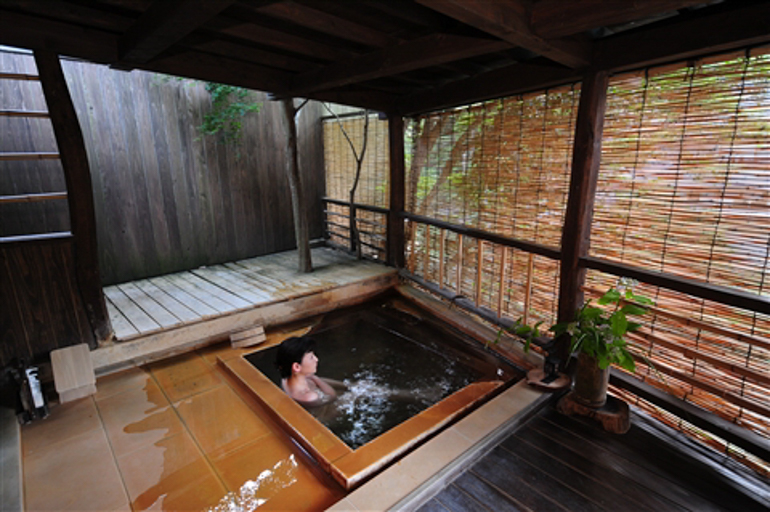
This bath is said to be the origin of guestrooms with an included open-air onsen. Created in 1978. Afterwards, it has been visited by a large number of people related to the industry, and featured in several types of media, including television. This room could be said to be the decisive factor that put “Wasure-no-sato GAJOEN” in the spotlight. At the back of the bath, which is located right next to the Amorigawa river and into which hot spring water flows directly from the source, there is an open-air shower booth. The day beds wrapped in towel fabric are also a nice touch.
“Takeruyu” separate baths for men and women, and private onsen
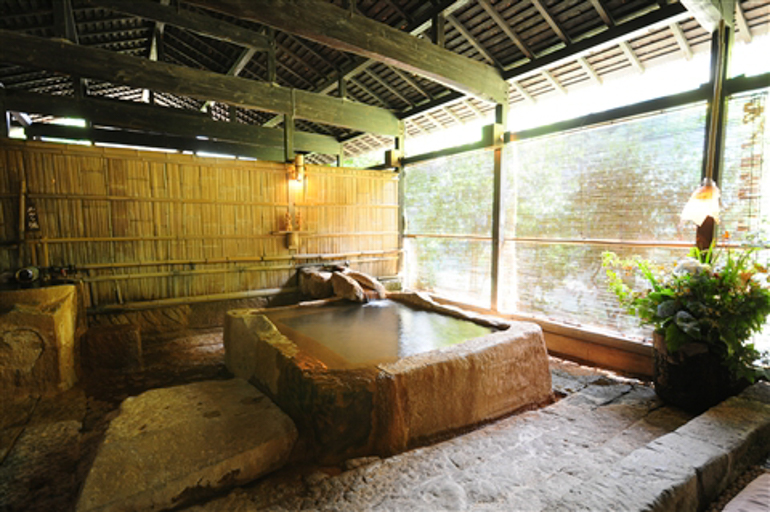
The large common baths of “Takeruyu” are separate for men and women, and consist in an spectacular bathtub hollowed out of a giant single rock weighing 20 tons, a process that took half a year.
Of course, the water used is 100% hot spring water flowing directly from its source.
The changing space is integrated into the bathing space, resulting in a great atmosphere.
The skin-beautifying effects of this alkaline spring waters containing earth (sodium, calcium, magnesium – hydrogen carbonate spring) and the feeling of refreshment that you will enjoy after your bath will certainly make for amazing memories of your trip.
And if this was not enough, the bath is available for private use between 9:00 pm and 6:00 am of the following morning. Private use operates on a first come, first served basis.
Turn around the wooden board that reads “Currently Under Private Use” hanging on the entrance, and use the lock to close the door from inside.
“Tsubaki” special annex: a living room with a bath
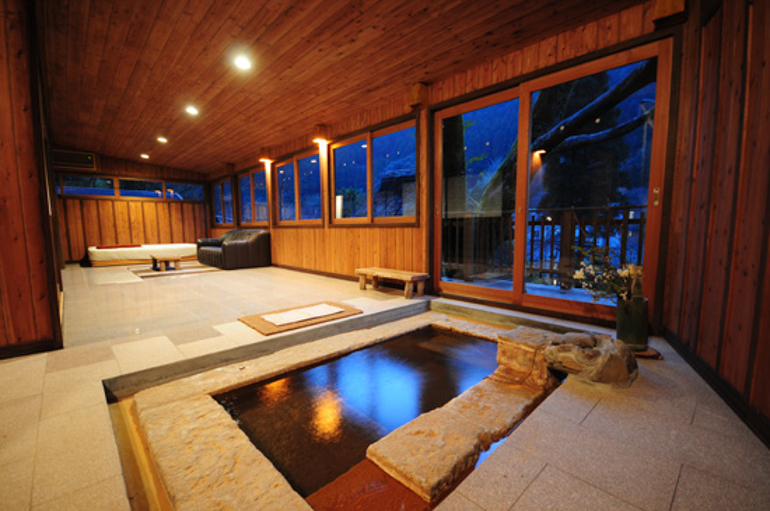
This is GAJOEN’s latest proposition: “a living room with a bath,” which comes as the next revolution after “guestrooms with an open-air bath.”
Instead of the guestroom having an open-air bath attached to it, this new concept is more about installing the bathtub itself right in the middle of the room.
What would otherwise be an open air space becomes then a “room” equipped with air conditioning and sofas.
The air conditioning allows guests to enjoy a comfortable bath not only during the cold of the winter, but also in the summer, when it can get too hot outside.
Worthy of note is also the fact that the floor of this room is heated by onsen pipes running right underneath it.
Private baths: “Utaseyu & Ramuneyu”
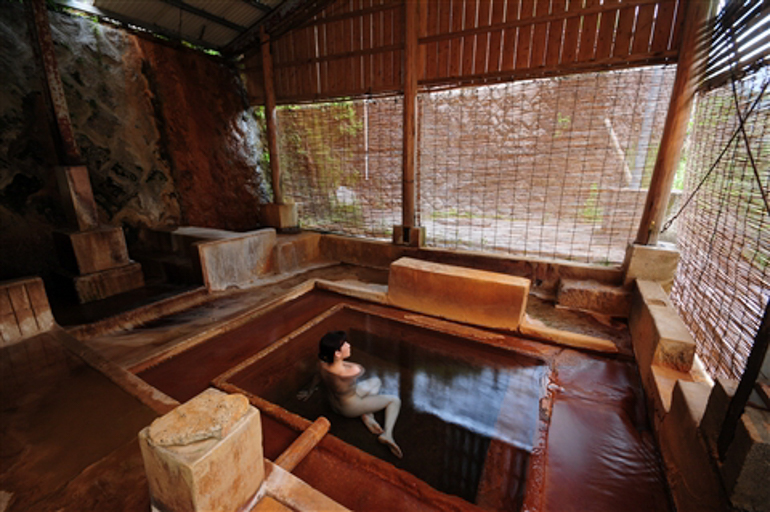
This nostalgic private baths by the side of the Amorigawa river evoke images of ancient watering places. There are two bathtubs and a waterfall shower (Utaseyu.) The tub at the back, known as “Ramuneyu” (about 36 degrees Celsius) is characterized by its “simple carbon dioxide springs” (estimation / no analysis chart). A little after you get in the tub, you can feel how the carbonic acid foam begins to attach to your body hair. The other tub is filled with “mixed alkaline spring waters containing earth” (sodium, calcium, magnesium – hydrogen carbonate spring,) just like the “Takeruyu” bath and the open-air onsen included in the guestrooms. In other words, guests can enjoy two different types of hot spring waters in this private bath. By the way, the “Utaseyu” waterfall shower right next to the “Ramuneyu” tub uses alkaline spring waters containing earth at a low temperature of 37 degrees Celsius.